
ROI (Return on Investment)
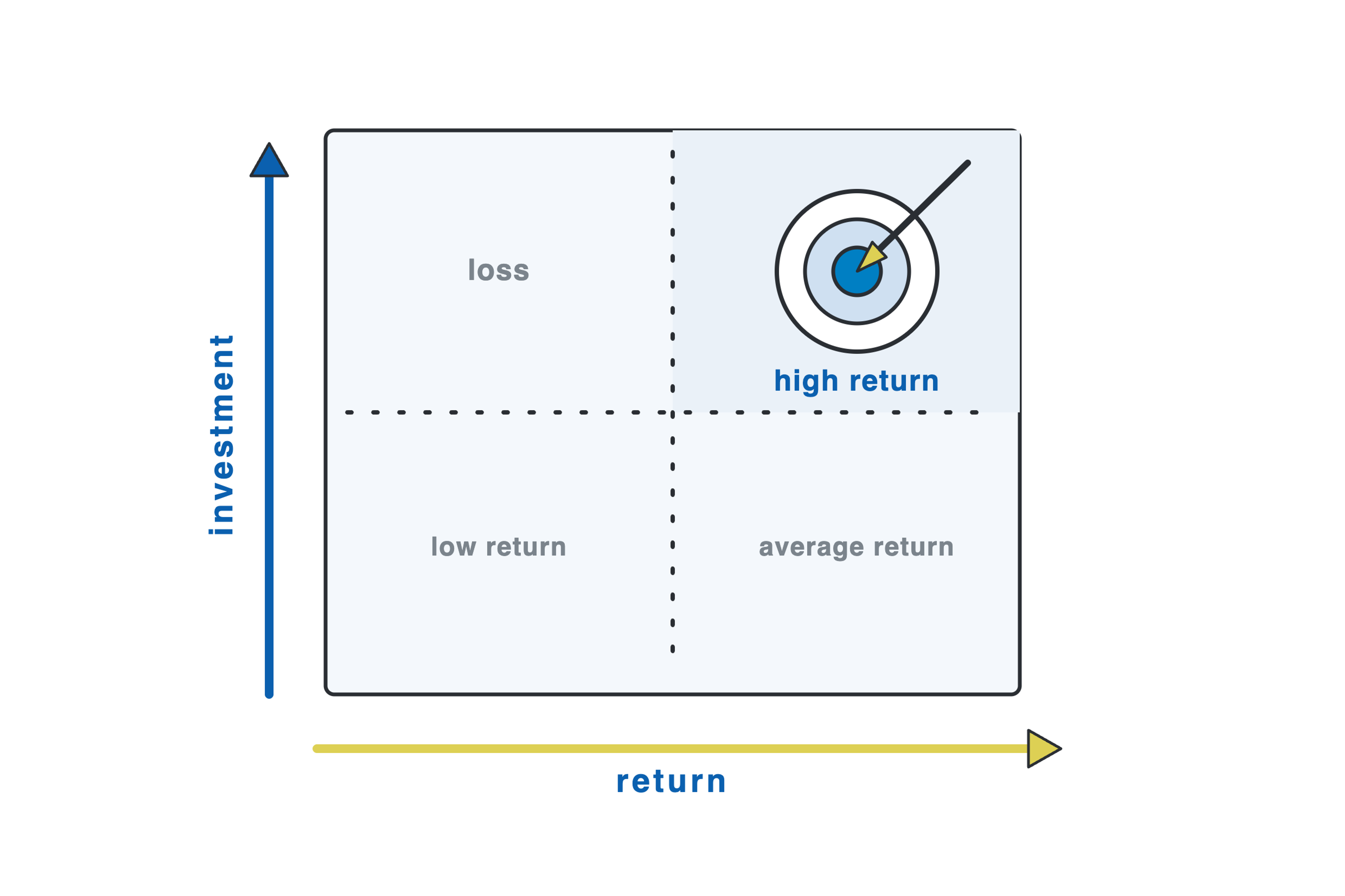
Return on Investment (ROI) is a financial metric that measures the return generated by an investment relative to its cost. It indicates how much value an investment creates, expressed as a percentage of the original investment.
How it works
ROI is calculated by dividing the net return on an investment by the cost of that investment and expressing the result as a percentage.
ROI = ((net return − cost) / cost) × 100%
A positive ROI means the investment generated more value than it cost. A negative ROI indicates a loss.
Example
You invest €10,000 in a marketing campaign. The campaign generates €15,000 in net return that can be directly attributed to the campaign.
ROI = ((15,000 − 10,000) / 10,000) × 100% = 50%
The campaign therefore generated a 50% return on top of the original investment.
In marketing, ROI is often used to compare the effectiveness of different campaigns. One important consideration is that ROI is only reliable if the return can be accurately attributed to the correct investment. For campaigns running across multiple channels, this attribution can be difficult to determine. In addition, a simple ROI calculation does not take into account the time value of money or benefits that only become visible over the longer term, such as brand preference or customer loyalty.


