

Retriever Solutions
The data backbone of the media planning ecosystem in the Benelux.
Structured media data for planning, buying and analytics workflows
Media Data Infrastructure & APIs
Retriever's APIs provide development teams with programmatic access to structured data on advertising opportunities across different media channels and markets.

Delivery & formats
- RESTful APIs with documented endpoints and stable versioning
- Output in JSON and XML
- Scalable infrastructure for high-volume production environments
- Secure access through token-based authentication and user roles

Data characteristics
- Consistently and uniformly structured across sources, channels, and markets
- Continuously maintained master data for planning and booking environments
- The dataset includes publisher master data and information on advertising opportunities, including rates, formats, technical specifications, publishing calendars, and editorial and commercial contact details.
Subscriptions & Data services
Retriever offers modular subscription services that can be used separately or in combination.

5,000+ media: 100% cross-media
- Online
- Magazines
- Trade publication
- Newspapers
- Supplements & special editions
- Free sheets
- (D)OOH
- Cinema
- Podcasts
- Audio & video

Retriever collects not only BeLux media data but also data in The Netherlands. Visit retrievermedia.be for BeLux media data and retriever.nl for Dutch media data.

Media Data Subscriptions
Structured master data on publishers, advertising opportunities, and rate card data in the Benelux.

Search & Discovery API
Programmatic search for advertising opportunities based on audience, geography, medium, and advertising type.

Media Analysis & Market Insights
Comparative data across channels, advertising types, rates, and periods.

Reach Analysis & Scenario Modelling
Insight into geographical overlap and coverage of media combinations.

Data feeds
Structured exports for import into planning, procurement, and booking systems.
Integration & Technical Support
Retriever integrates with media planning environments and supports integration with booking and media buying systems.
Retriever Solutions in practice
Case 1 - Online rate card data for an international media research agency
Context
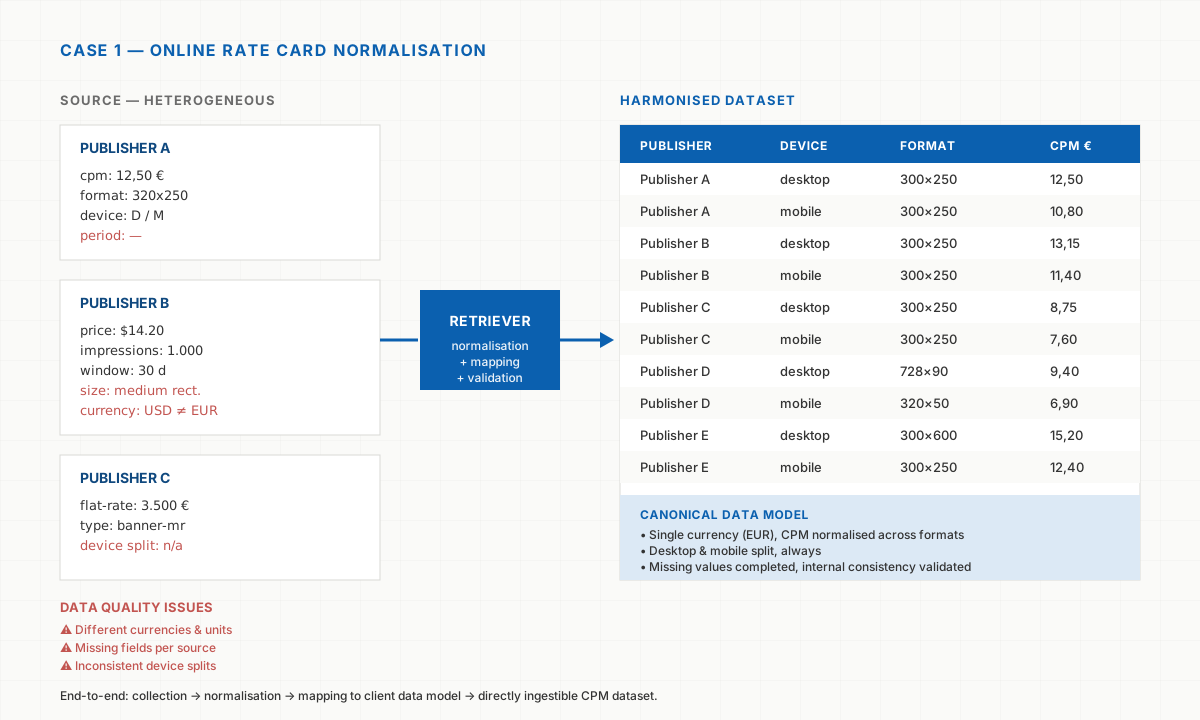
An international media research agency uses rate card data delivered through the Retriever API to calculate media spend at campaign and budget level for cross-media reporting and competitive spend analyses. The client requires a complete and internally consistent dataset, structured according to a predefined data model and split by desktop and mobile.
Challenge
Online rate card data is supplied heterogeneously by publishers, with differing data structures, definitions, and pricing models. Manual processing is error-prone, costly at scale, and unsustainable within a recurring reporting cycle.
Solution
Retriever handles the end-to-end process: from data collection and normalisation to mapping onto the client-defined data model, including completion of missing values and consistency validation.
Result
A harmonised CPM dataset that can be directly ingested into the client's pipeline. In production for multiple years and renewed annually.
Case 2 - Print master data and advertising specifications for a global media-buying platform
Context
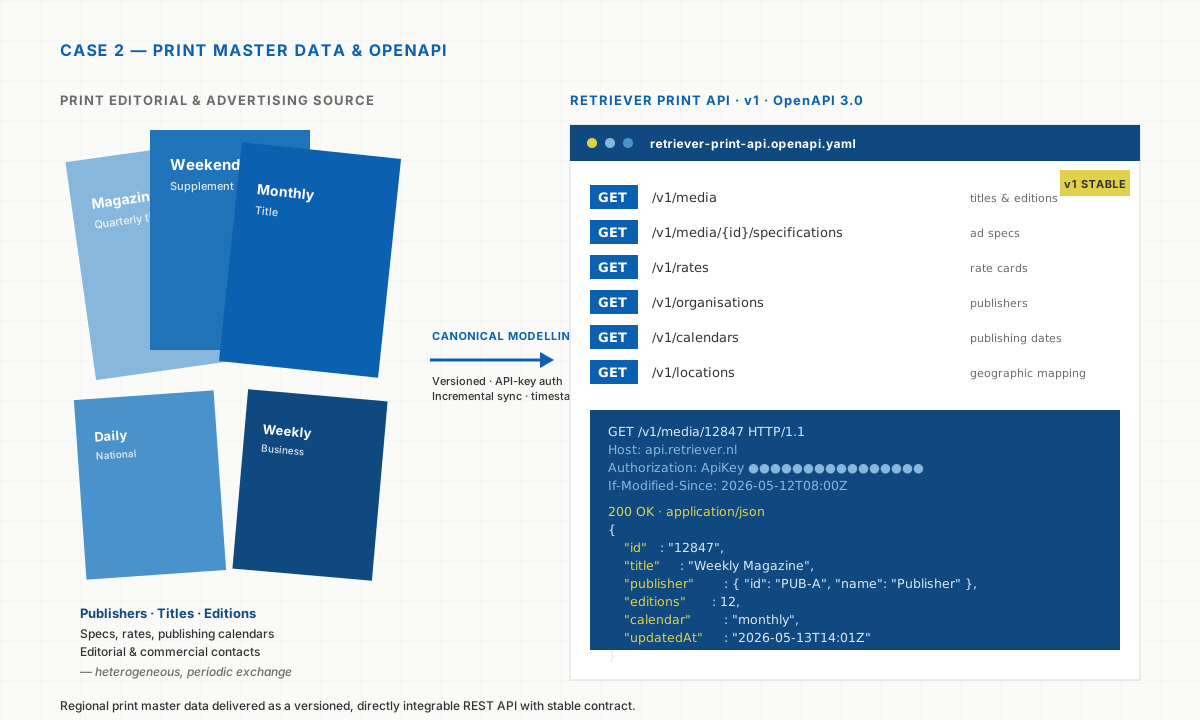
An international media-buying platform requires standardised, machine-readable master data and advertising specifications (canonically modelled) for regional print media: publishers, titles, editions, specifications, and rates — as a directly integrable source for planning and buying workflows.
Challenge
Manual input and periodic file exchange are not sustainable within a large-scale platform environment. Data structures evolve, and any change without controlled versioning results in additional development work on the platform side.
Solution
Retriever exposes print master data and advertising specifications through a versioned REST API with canonical resources covering media, organisations, rates, calendars, and geographical locations, including an OpenAPI 3.0 descriptor. Authentication is handled via API key; incremental synchronisation is based on timestamps.
Result
A directly integrable interface for the platform, with stable version management minimising additional development work resulting from data structure changes.
Case 3 - Geographical modelling of media reach for franchise organisations
Context
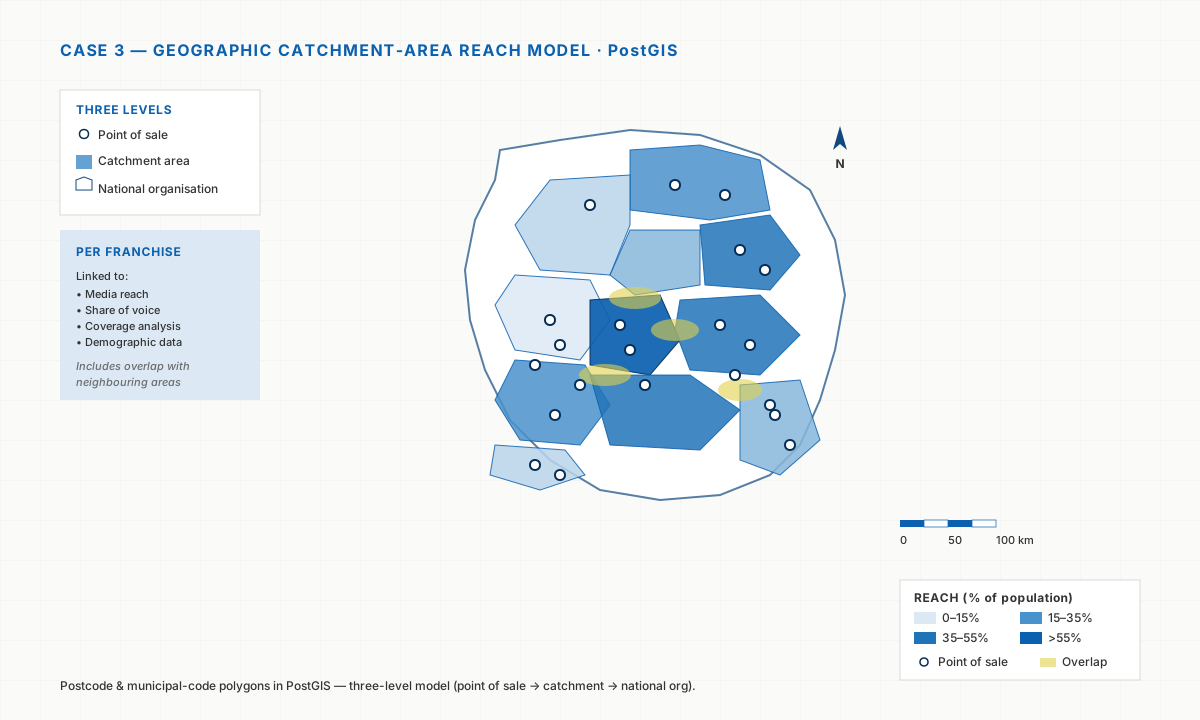
A franchise organisation wants to allocate media reach and share of voice to the catchment areas of individual franchisees, rather than relying on national averages that insufficiently reflect local reality.
Challenge
National benchmarks conceal substantial regional differences in reach, share of voice, and coverage. Effective local steering requires up-to-date geocoding and accurately defined catchment areas.
Solution
Retriever provides a geographical dataset in PostGIS linking points of sale to postal code and municipal code polygons across three levels: point of sale, catchment area, and national organisation. Catchment areas are continuously updated.
Result
Catchment areas are linked to media reach and demographic data, providing insight into reach, share of voice, and coverage analysis per franchisee - including overlap with neighbouring catchment areas - enabling media spend to be attributed to the organisations that actually benefited from the reach.