
Crypto
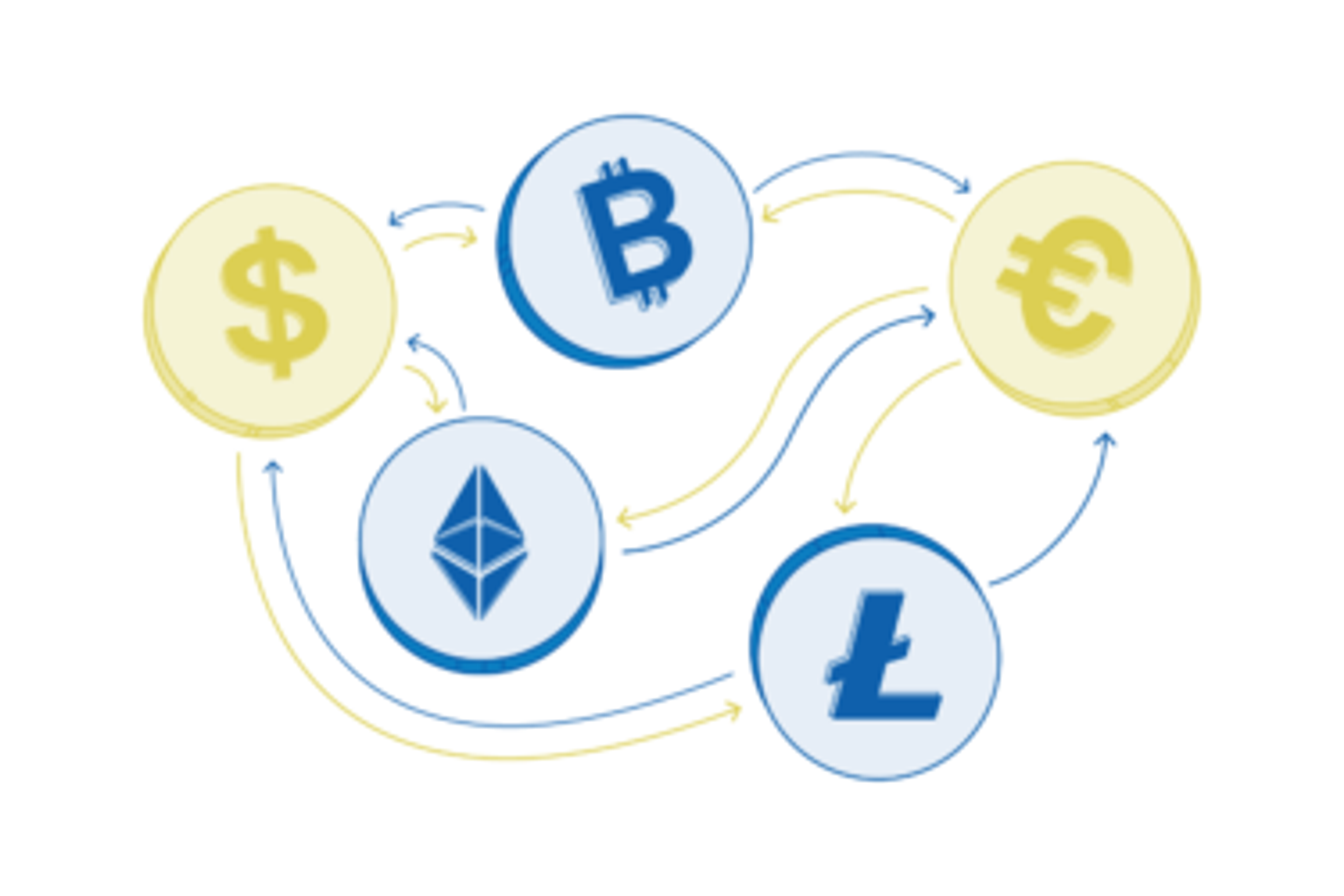
Crypto is a collective term for crypto-assets: digital assets that use cryptography and blockchain technology to record ownership and securely execute transactions. Unlike traditional financial systems, crypto-assets are generally managed through a decentralised network rather than by a central authority such as a bank or government.
The term crypto originally referred to cryptocurrencies, such as Bitcoin and Ethereum. Today, however, it has a much broader meaning and encompasses a wide range of digital assets.
How does crypto work?
Crypto-assets use cryptography to secure transactions and verify ownership. Transactions are recorded on a blockchain or a similar Distributed Ledger Technology (DLT) system. This enables digital assets to be transferred directly between users without the involvement of a central authority.
Types of crypto-assets
The crypto market consists of several categories of digital assets, including:
- Cryptocurrencies, such as Bitcoin and Ethereum, which are primarily used as a means of payment or a store of value.
- Stablecoins, whose value is pegged to a currency such as the euro or the US dollar.
- Utility tokens, which provide access to a digital platform or a specific service.
- Security tokens, which represent financial rights, such as shares or bonds.
- Non-Fungible Tokens (NFTs), which can represent ownership of unique digital or physical assets.
Crypto as an industry
A global industry has emerged around crypto, including cryptocurrency exchanges, payment service providers, blockchain developers, wallet providers and other specialised companies. Governments are increasingly introducing legislation and regulations to oversee this market. Within the European Union, the Markets in Crypto-Assets Regulation (MiCA) provides the primary regulatory framework.
Crypto is not a single asset class
A common misconception is to regard all crypto-assets as one homogeneous category. In reality, crypto-assets differ significantly in their purpose, technology, risk profile and regulatory treatment.
For example, Bitcoin, which was developed as decentralised digital money, is fundamentally different from a centrally issued stablecoin or an NFT representing ownership of a unique digital asset. The term crypto therefore does not refer to one specific product, but to a broad category of digital assets with diverse characteristics and applications.


